

Rift valley: definition and geologic significance
In the original definition by John W. Gregory (1894) a rift valley is “a linear valley with parallel and almost vertical sides, which has fallen owing to a series of parallel faults”. The typical morphology is characterized by a valley floor, between 30 and 100 km wide, separated from surrounding plateaus by huge scarps that may vary in height from a few hundreds to a few thousands of meters. Archetype of this morphology is the East African rift valley, where the concept has been originally introduced. In this region the rift valley extends in a roughly north-south direction from the Afar depression, where the system of tectonic troughs joins the oceanic domains of the Red Sea and Gulf of Aden, to the Zambezi river in Mozambique.


Rift valleys are enormous fractures affecting the continental plates that widen progressively with time: they represent the first stages in the complex process of extension and rupture of continents and anticipate the development of new oceanic basins between them. The process is related to the divergent movements of lithospheric plates above the underlying asthenosphere in slow convective motion. A rift valley represents the primary and most superficial response to this divergence and to the consequent application of tensional forces to the plates, which is manifested through the development of normal faults. These represent fractures with vertical displacement of the Earth’s surface that accommodate the separation of portions of the crust and determine the collapse of the block in between. Major normal fault systems thus give rise to the downthrowing of the valley floor with respect to the surrounding plateaus and form the huge tectonic escarpments bordering the rift valley. These tectonic movements give rise to a diffuse seismicity and volcanism, phenomena that are typically associated with the African rift valleys.

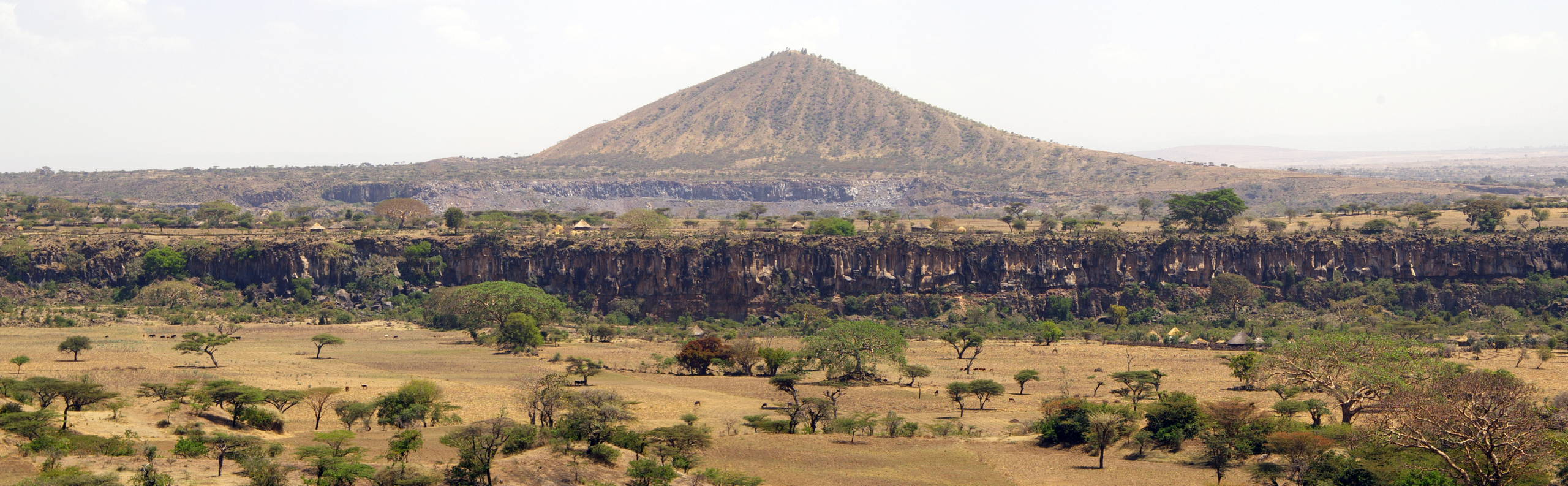
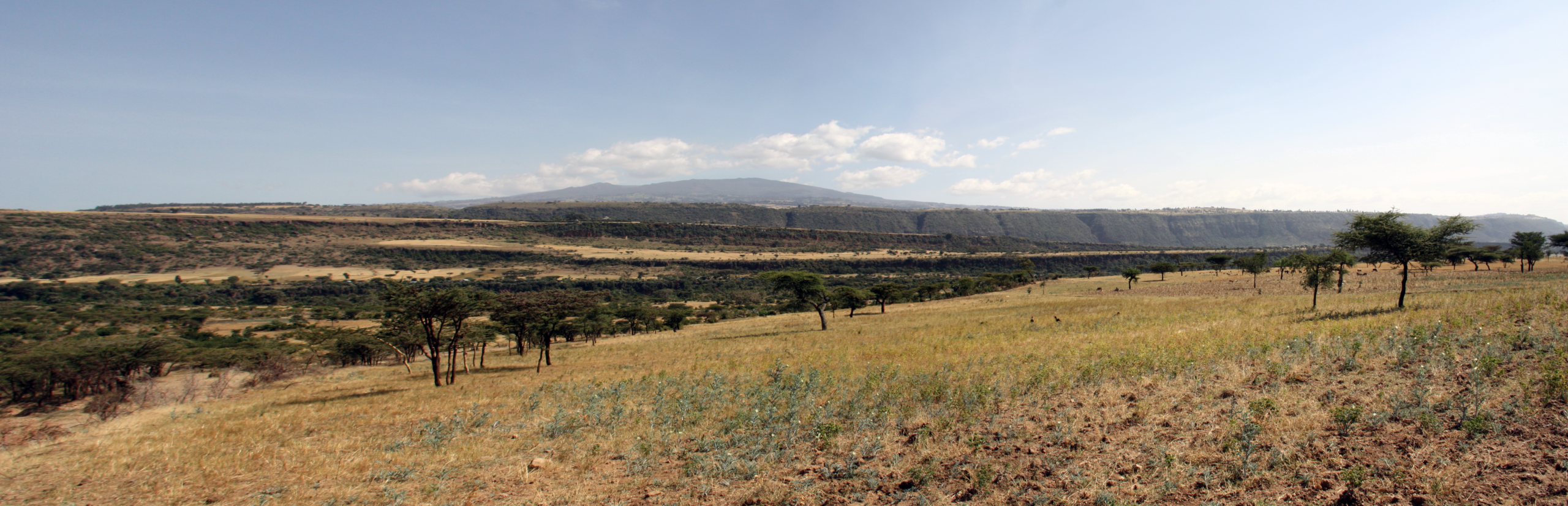
The development of the rift valleys is thus a consequence of the complex interactions between lithospheric plates and mantle dynamics, and represents the first stage of the process which -over millions of years- leads to the break-up of continental plates and the development of a new oceanic basin.

These complex interactions, their surface expressions (e.g., volcanism, seismicity, topography) and their variation with time are exemplified in a very clear fashion in the Ethiopian rift valley, as illustrated by its geologic evolution.